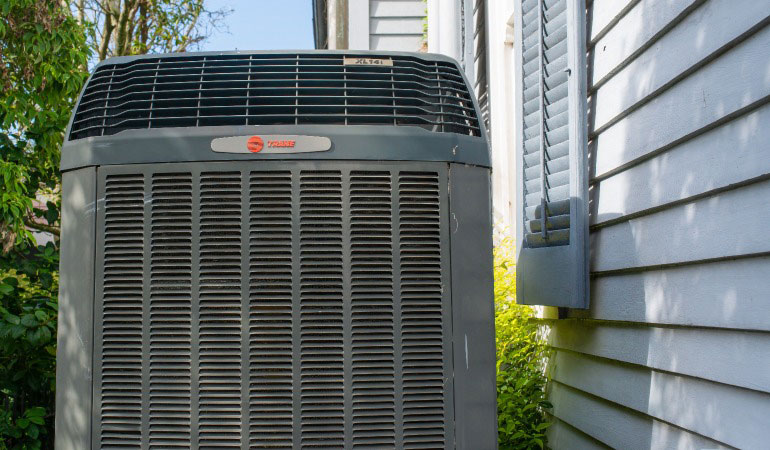
Replacing an air conditioner is one of the larger home investments most Asheville homeowners make. Done right, a new system runs efficiently for 15 to 20 years and handles WNC's climate without the performance issues that plague poorly matched equipment. Done wrong — wrong size, wrong refrigerant charge, wrong duct configuration — and you'll spend years chasing problems that trace back to installation day.
Here's what to think through before you commit.
Sizing Is the Most Important Decision — and the Most Commonly Botched
The HVAC industry has a sizing formula problem. Many contractors still use rough square footage rules to size cooling equipment, which produces oversized units in mild climates and undersized units in demanding ones. Asheville sits in an unusual position — temperatures are moderate by Southeast standards, but humidity loads are high and home characteristics vary dramatically across neighborhoods.
The correct approach is a Manual J load calculation, which accounts for square footage, ceiling height, window placement and orientation, insulation quality, and local climate data. An older craftsman bungalow in Montford with single-pane windows needs a different system than a well-insulated newer build in Arden with the same square footage.
If a contractor quotes you a unit size without doing a load calculation, that's a red flag worth taking seriously.
Why Oversized Units Cause Problems in WNC
Oversized AC units short cycle — they cool the space quickly, shut off, then kick back on before the home's humidity has had time to be addressed. In Asheville's humid summers, this is a real comfort problem. You might hit your temperature setpoint but still feel clammy because the system never ran long enough to pull moisture out of the air.
A properly sized unit runs longer, more efficient cycles, removes humidity effectively, and puts less wear on the compressor over time. Bigger is not better in cooling equipment.
Ductwork: The Part of the System Everyone Ignores
In older Asheville homes — particularly the craftsman and colonial revival stock common in North Asheville, West Asheville, and Kenilworth — ductwork was often installed in unconditioned crawl spaces or attics without modern sealing standards. Installing a new, efficient AC unit on a leaky duct system is like putting new tires on a car with a broken alignment. The system will underperform and you won't understand why.
Before installing new equipment, ask your contractor to assess duct condition and leakage. If the ducts are significantly leaky, addressing them alongside the new installation is almost always the right call — the efficiency gains justify the added cost.
Mini-Split vs. Central AC: Which Makes Sense for Your Home
Central air conditioning works well in homes with existing ductwork in reasonable condition. For older Asheville homes without existing duct systems — or for additions, detached spaces, or rooms that aren't adequately served by the central system — a mini-split (ductless) system is often the better fit.
Mini-splits are also well-suited to WNC's shoulder seasons, where you need cooling in one part of the house while another is comfortable without it. Zoning flexibility is a real advantage in mountain climates with inconsistent temperature distribution across a home.
Questions to Ask Before You Sign
Before committing to a new AC installation, ask any contractor you're considering:
Did you perform a Manual J calculation? If the answer is no or vague, the sizing may be guesswork.
What refrigerant does this system use? R-410A has been phased out in new equipment; modern systems use R-454B or R-32. This matters for long-term serviceability and refrigerant costs.
What's the SEER2 rating? Higher efficiency ratings reduce operating costs. In a mountain climate with moderate cooling loads, a mid-to-high SEER2 unit often pays back in energy savings within a few years.
Do you assess ductwork as part of the installation? Any contractor not addressing this question isn't thinking about system performance holistically.
Who pulls the permit? In Asheville and Buncombe County, AC installation requires a permit. If a contractor suggests skipping it, that's a significant red flag.
A new AC system is a significant investment. The right equipment, properly installed, will handle Asheville's climate quietly and efficiently for years. The wrong equipment — oversized, under-charged, or connected to leaky ducts — will generate service calls and frustration until it's replaced again.