Most homeowners interact with their AC the same way they interact with their car engine. They turn it on, expect it to work, and only think about what's happening underneath when something goes wrong. That's fine until it isn't. Understanding the basics of how your cooling system operates makes it significantly easier to describe a problem accurately, recognize when something is off early, and make informed decisions when a technician tells you what's wrong.
This isn't a technical manual. It's the practical version — what's actually happening when your AC runs, explained in plain language.
The Core Principle: AC Doesn't Add Cold, It Removes Heat
This is the part most people get backwards. Your air conditioner doesn't generate cold air and push it into your home. It removes heat from the air inside your home and moves it outside. What's left behind feels cool because the heat has been extracted from it.
The mechanism that makes this possible is refrigerant, a chemical that cycles between liquid and gas states and absorbs or releases heat as it changes. Understanding that cycle explains most of what your AC is doing at any given moment.
The Four Main Components
The Evaporator Coil
Located inside your home, typically in the air handler or furnace, the evaporator coil is where heat removal actually happens. Warm air from inside your home is pulled across this coil by the blower fan. Inside the coil, refrigerant is in a low-pressure liquid state, which causes it to absorb heat from the passing air and evaporate into a gas. The now-cooled air is pushed back into your home through the duct system.
In Asheville's humid climate, the evaporator coil also acts as a dehumidifier. As warm, moist air passes over the cold coil surface, moisture condenses on the coil and drains away, which is why your AC produces condensate and why a properly functioning system also reduces indoor humidity.
This is also why musty odors are common in WNC homes. The evaporator coil surface stays cold and damp, which is ideal for mold and biological growth. If your system smells musty when it runs, the coil is the first place to investigate.
The Compressor
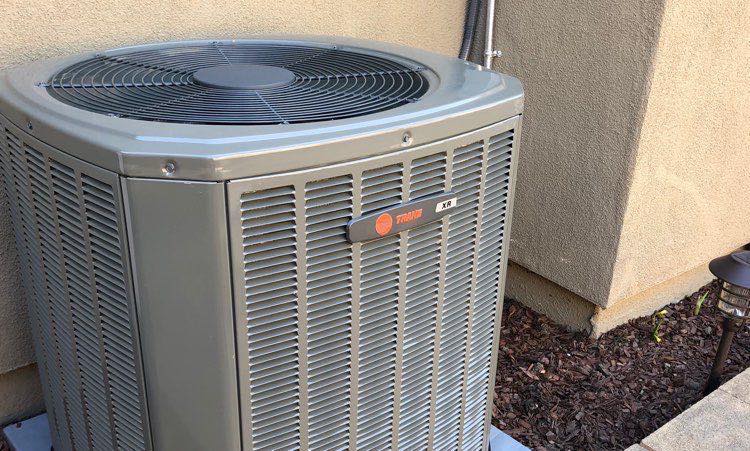
After absorbing heat in the evaporator coil, the refrigerant, now a warm gas, travels outside to the compressor, located in your outdoor unit. The compressor pressurizes the refrigerant gas, which raises its temperature further and prepares it to release the heat it's carrying.
The compressor is the most mechanically demanding component in the system and the most expensive to replace. Most of the unusual sounds that come from an outdoor unit, including grinding, rattling, and screeching, originate here. A compressor showing symptoms should be addressed quickly; running a failing compressor accelerates the damage.
The Condenser Coil
Still in the outdoor unit, the hot pressurized refrigerant gas moves through the condenser coil, where a fan blows outdoor air across it. This allows the refrigerant to release the heat it carried from inside your home into the outdoor air, which is why the air blowing out of the top of your outdoor unit on a hot day feels noticeably warm.
As it releases heat, the refrigerant condenses back into a liquid. This is where Asheville's summer temperatures matter. On a 95-degree afternoon, the outdoor unit is trying to dump heat into air that's already very warm. The hotter the outdoor temperature, the harder the condenser has to work to complete this process, which is why AC systems struggle on the hottest days and why oversized units that short-cycle don't give the condenser enough run time to complete the heat exchange properly.
The Expansion Valve
Before the liquid refrigerant returns to the evaporator coil to start the cycle again, it passes through the expansion valve, which drops its pressure rapidly. This pressure drop causes the refrigerant to cool significantly, preparing it to absorb heat from your home's air all over again.
The expansion valve is a precision component. If it malfunctions, whether sticking open or closed, refrigerant flow through the system is disrupted, which typically shows up as poor cooling performance or icing on the refrigerant lines.
What the Thermostat Actually Does
Your thermostat is a switch, not a throttle. When the indoor temperature rises above your setpoint, it signals the system to run. When the temperature drops back to the setpoint, it signals the system to stop. The AC doesn't cool faster if you set the thermostat to 65 instead of 74. It just runs longer before shutting off.
This is relevant in Asheville where homeowners sometimes set thermostats dramatically low on hot days hoping to cool the space faster. It doesn't work that way, and it keeps the system running in conditions where it's already working at its limits.
What Normal Operation Looks and Sounds Like
Knowing what normal looks and sounds like makes abnormalities easier to spot.
A properly functioning system should start smoothly with a soft hum from the outdoor unit. Airflow from vents should be consistent and cool within a few minutes of startup. The system should run in full cycles, typically 15 to 20 minutes, before shutting off, not kicking on and off every few minutes.
Condensate dripping from the drain line is normal. The outdoor unit fan running continuously while the system is on is normal. Some refrigerant line insulation sweating slightly in humid conditions is normal.
What isn't normal: banging or clanging on startup, ice forming on refrigerant lines or the outdoor unit during cooling season, water pooling near the indoor air handler, weak airflow despite a clean filter, or the system running continuously without reaching the setpoint.
Why Asheville Homes Have Unique Cooling Demands
Most residential AC equipment is designed and tested at sea level. At Asheville's 2,200-foot elevation, air density is slightly lower, which affects heat transfer efficiency and refrigerant behavior. It's a subtle difference but a meaningful one. Systems need to be properly charged for mountain elevation, not just sea-level defaults.
The French Broad River valley also creates microclimatic humidity conditions that increase the dehumidification load on cooling systems. Homes in lower-lying areas near the river or in sheltered hollows experience more persistent humidity than homes on ridgelines, which affects how hard the system has to work and how quickly moisture accumulates on the evaporator coil.
Older homes in West Asheville, Kenilworth, and Montford often have duct systems that weren't designed for modern high-efficiency equipment. Air leakage in those ducts means the system is cooling unconditioned space, including crawl spaces and wall cavities, rather than living areas, which makes the system appear to underperform even when it's functioning correctly.
If your AC isn't keeping up or you're noticing any of the symptoms described here, see our AC Repair page or call Alpine Air at 828-537-0735.