A County With More Housing Variety Than Most
Buncombe County doesn't have a single housing profile. It has several, and each creates its own set of HVAC demands. Asheville's urban core and historic neighborhoods Montford, Kenilworth, Norwood Park, Grove Park are dominated by older construction. Many of these homes were built between 1910 and 1960, before central HVAC existed as a concept. Ductwork was added later, often routed through tight crawl spaces or retrofitted into wall cavities in ways that compromise airflow and efficiency.
These homes need technicians who understand older infrastructure and can diagnose problems that don't appear on the surface. North Asheville and the communities along Merrimon Avenue represent a mix of mid-century construction and larger single-family homes with more complex HVAC needs. Higher square footage, multiple stories, and finished basements create distribution challenges that standard equipment sizing doesn't automatically solve. The suburban and semi-rural communities of Arden, Skyland, and Fletcher to the south tend toward newer construction with tighter building envelopes.
These homes hold conditioned air well but can develop indoor air quality and humidity issues that older, leakier homes naturally avoid through infiltration. Weaverville to the north and Swannanoa to the east are their own communities with their own characters — different elevations, different housing stock, and different exposure to the weather patterns that move through the French Broad and Swannanoa river valleys.
Buncombe County winters vary considerably depending on where you are in the county. Homes at higher elevations in the areas surrounding Asheville see colder temperatures and more sustained cold than homes in the valley floor communities. A heat pump that performs well in Arden may need a properly configured backup heat source to handle the colder nights in communities with more elevation exposure.
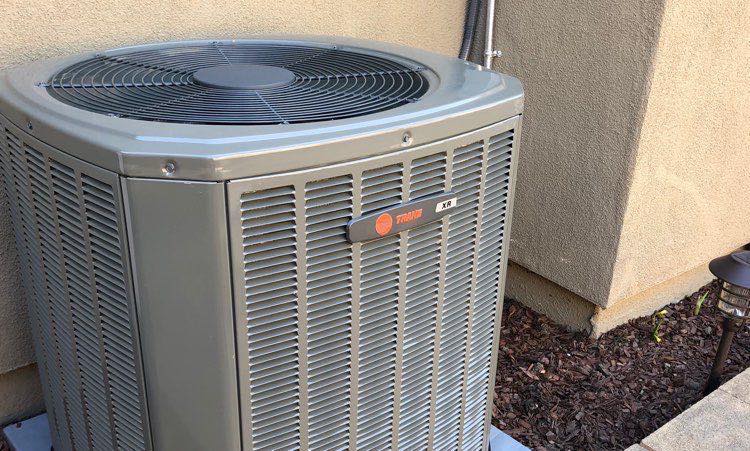
Alpine Air installs and services the full range of residential heating equipment throughout the county. Gas furnaces remain a strong choice for homes with natural gas service and a need for reliable high-output heat on the coldest nights. Heat pumps, particularly modern cold-climate inverter-driven models, deliver efficiency advantages during the long shoulder seasons that Buncombe County experiences between summer and true winter cold. Dual fuel hybrid systems combine both, running the heat pump efficiently in moderate conditions and switching to gas when outdoor temperatures make heat pump operation less efficient.
For older Buncombe County homes with aging furnaces or original baseboard heating, a system assessment before committing to replacement is worth the time. The right replacement depends heavily on what the existing infrastructure — ductwork, gas lines, electrical capacity — can support without additional modifications.

Cooling demand in Buncombe County is shaped more by humidity than by temperature. Asheville's summers are mild compared to the Piedmont, but the French Broad River corridor and the lower-elevation neighborhoods near the river experience persistent late-summer humidity that increases the dehumidification load on cooling systems significantly.
This matters for equipment sizing. A system sized purely for temperature load in Buncombe County, without accounting for latent humidity load, will hit the thermostat setpoint without adequately drying the air. Residents feel the temperature but still feel uncomfortable. Properly accounting for the county's humidity profile during equipment selection prevents this.
Older homes in the urban Asheville neighborhoods frequently have duct systems that weren't designed for modern high-efficiency air conditioning. Leaky ducts in unconditioned crawl spaces cool the crawl space rather than the living area above, which explains why some Buncombe County homeowners report that a newer, more efficient unit seems to perform worse than the older one it replaced. The equipment isn't the problem — the infrastructure it's connected to is.
For homes without existing ductwork, or for problem rooms and additions in homes where the central system can't adequately reach, ductless mini split systems are a practical and efficient solution that avoids the cost and disruption of duct installation in finished older construction.
What Buncombe County Homeowners Ask Us Most
My home is in an older Asheville neighborhood. Is my ductwork going to cause problems?
Likely worth assessing before assuming otherwise. Pre-1970 duct systems in Buncombe County homes vary widely in condition. Some have been partially updated over the years; others are entirely original. The symptoms of duct leakage — rooms that won't reach temperature, high energy bills relative to the home's size, inconsistent airflow between rooms — are common enough in these neighborhoods that it's always part of our diagnostic conversation.
Does elevation affect which heating system makes sense for my home?
It's a meaningful factor. Communities at higher elevations within the county experience harder winters, which affects how a heat pump performs without a backup source and how a gas furnace needs to be sized and tuned. We account for specific location within the county when making equipment recommendations, not just the county as a whole.
How often should I be servicing my system in this climate?
Twice a year is the standard recommendation for Buncombe County homes, and it's the right one. A pre-season heating check in September or October and a cooling system check in March or April catches problems before peak demand season rather than during it. WNC's humidity also accelerates certain types of wear — coil contamination, drain line clogging, and biological growth on indoor components — that show up more quickly here than in drier climates.
Do you service both Asheville city limits and the unincorporated county areas?
Yes. Alpine Air serves both incorporated Asheville and the surrounding unincorporated communities throughout Buncombe County. Whether you're in a neighborhood with an HOA and city services or on a rural property outside the city limits, we cover it.
What Asheville Homeowners Are Saying About Alpine Air
Alpine as incredible! The guys were incredibly professional, communicated well, and did a great job for us. We have used them on multiple properties we own and their service and work is top notch!
John Henderson
Great family business. Mark, is very knowledgeable, trustworthy and a good communicator. they installed a new HVAC system at my home, for the quote price that was agreed upon. I won't hesitate to use them again or recommend them.
Amanda Regino
Alpine Air is the company to call for any of your HVAC needs. They are fast and efficient and their work is clean and neat. Mark is very knowledgeable and will answer any of your questions. Highly recommend
Samuil Romashchuk
CONTACT US