June in Asheville brings the first real test of the cooling season. Afternoons warm up, humidity climbs out of the French Broad valley, and a system that cruised through a mild spring suddenly has to work for it. This is when the calls start coming in, and the most common complaint is some version of the same thing: the AC is running but the house is not getting cool.
Before assuming the worst, it is worth understanding what actually causes this. Most mid-summer cooling failures trace back to a handful of issues, several of which are straightforward to address once identified.
The AC is running, but the House Stays Warm
This is the most common version of the problem and the one with the most possible causes. Running and cooling are not the same thing. A system can cycle continuously and still fail to bring the home to temperature for several different reasons.
Dirty or Clogged Air Filter
Start here before anything else. A filter that has not been changed since spring can restrict airflow across the evaporator coil enough to dramatically reduce cooling capacity. The system runs, the blower moves air, but not enough air is making it across the coil to actually transfer heat effectively. In Asheville's pollen-heavy spring and early summer, filters load up faster than most homeowners expect.
Pull the filter and hold it up to light. If you cannot see light through it, replace it before calling anyone. A significant percentage of summer service calls involve a filter that should have been changed weeks earlier.
Low Refrigerant
Refrigerant is the substance that actually moves heat from inside your home to the outdoor unit. If the system has developed a leak, refrigerant level drops and cooling capacity drops with it. The system continues to run but produces less and less cooling effect as refrigerant pressure falls.
Low refrigerant shows up as warm air from the vents despite the system running, ice forming on the refrigerant lines or the outdoor unit, and in some cases a hissing or bubbling sound near the indoor unit. At Asheville's elevation, refrigerant charge tolerances are tighter than at sea level, which means even a small loss shows up in performance faster than it might in lower-elevation markets.
Refrigerant issues require a licensed technician. Refrigerant cannot be purchased or added by homeowners, and adding refrigerant without finding and repairing the leak is a temporary fix that will repeat.
Failing Capacitor
The capacitor is an electrical component that helps start and run the compressor and fan motors in the outdoor unit. Capacitors degrade over time, and a weakening capacitor causes the motors to draw more current, run less efficiently, and eventually fail to start at all. A system with a failing capacitor may run intermittently, struggle to start on hot afternoons when electrical demand is highest, or run continuously without producing adequate cooling.
Capacitor failure is one of the more common summer repair calls across Asheville and the surrounding communities. It is also one of the more straightforward fixes when caught before it causes secondary damage to the compressor or fan motor.
Dirty Condenser Coils
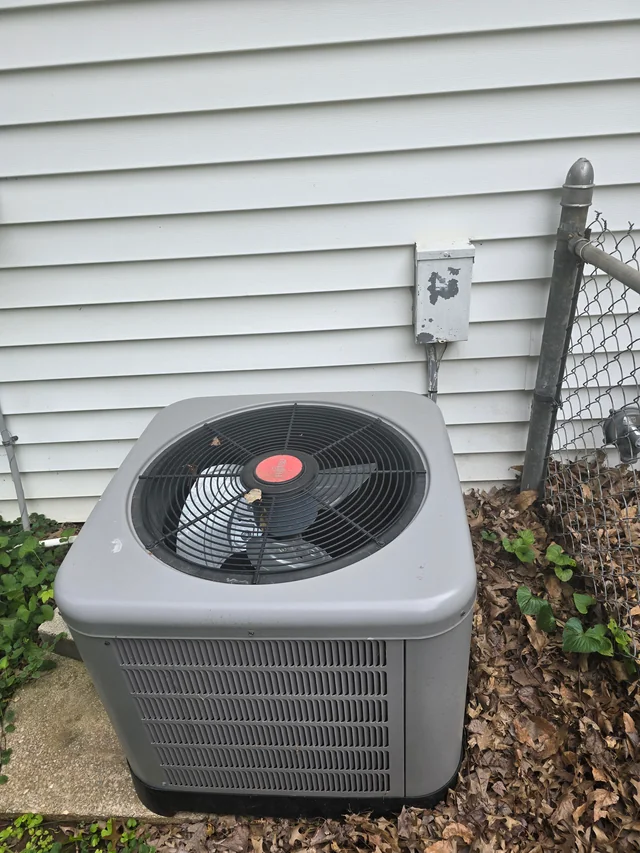
The outdoor unit's condenser coil releases the heat your system pulls from inside your home into the outdoor air. When the coil surface is coated with dirt, pollen, grass clippings, or cottonwood from nearby trees, it cannot transfer heat efficiently. The system has to work harder to do less, efficiency drops, and on the hottest June afternoons the coil may not be able to reject heat fast enough to maintain cooling capacity.
A visual inspection of the outdoor unit is something homeowners can do. If the coil fins are visibly clogged with debris, a gentle rinse from a garden hose, top to bottom, clears most surface contamination. Do not use a pressure washer. The aluminum fins are easily damaged and bent fins reduce airflow further.
The House Cools Down But Feels Uncomfortable Anyway
This is a different problem from the system not cooling at all, and it is particularly common in Asheville and the broader WNC region during June and July.
The Humidity Problem
Asheville's early summer humidity is significant. The French Broad valley holds moisture, and a cooling system that short cycles, running brief cycles to hit the temperature setpoint before shutting off, never runs long enough to pull adequate moisture from the air. The home reaches 74 degrees but feels like 78 because the relative humidity inside is still high.
This is often an equipment sizing issue. An oversized AC unit cools so quickly that it satisfies the thermostat before dehumidifying effectively. In Asheville's climate, where latent humidity load is a real factor, a system that is too large for the space is almost as problematic as one that is too small.
If your home consistently feels clammy despite reaching the temperature setpoint, a whole home dehumidifier integrated with the existing system is worth evaluating. It addresses the moisture problem directly without requiring equipment replacement.
Inadequate Airflow to Certain Rooms
Older Asheville homes with original or retrofitted ductwork frequently have distribution imbalances. Rooms at the end of long duct runs, rooms above garages, or additions connected to a duct system that was not designed for them never receive adequate airflow regardless of how well the central equipment performs. This reads as certain rooms staying warm while the thermostat location, usually a central hallway or main living area, satisfies and shuts the system down.
Balancing dampers, duct modifications, or in some cases a supplemental mini split for problem rooms are the solutions. Turning the thermostat lower to force more runtime is not, because it overcools the areas that are already comfortable and still does not fix the distribution problem.
When to Call and When to Wait
A few situations that warrant a service call without delay:
The outdoor unit is not running at all when the thermostat calls for cooling. The system is making sounds it was not making before, including grinding, squealing, or repeated clicking on startup attempts. Ice is visible on refrigerant lines or the outdoor unit during cooling season. The system trips the circuit breaker when it tries to start.
A dirty filter or debris-covered outdoor coil are things worth checking before calling. If those are clean and the system is still not performing, a diagnostic is the next step. In Asheville's June heat, a system that is struggling will only fall further behind as afternoon temperatures climb.
If your AC isn't keeping up this summer, visit our AC Repair page or call Alpine Air at 828-537-0735.